I have 5 reels sitting on my SSD, they are just sitting there. I can’t see them nor understand how much is left for me to have a video done.
Those five reels sit unseen not because of laziness, but because of a quiet bargain with potential. As long as the footage stays raw, I can be the person who is about to post something great.
Opening that folder forces me to close the gap between the edit I imagined and the imperfect one I can actually make today. That gap feels like proof I’m not good enough yet. Whenever I open my Instagram profile, I feel guilty about not being able to follow through and publish more reels, even though I already recorded them.
The guilt hits harder because my social media feed is a scroll of receipts. I see everyone else’s polished reels and published posts, and I compare their visible output to my invisible chaos.
That project on my computer feels like a personal failure, not because I haven’t worked on it, but because the algorithm always shows me what “done” looks like while I’m still staring at an “undone” project.
Somehow, the work you cannot see is the work you carry the longest.
Before the internet, most of the work left a physical object you could touch.
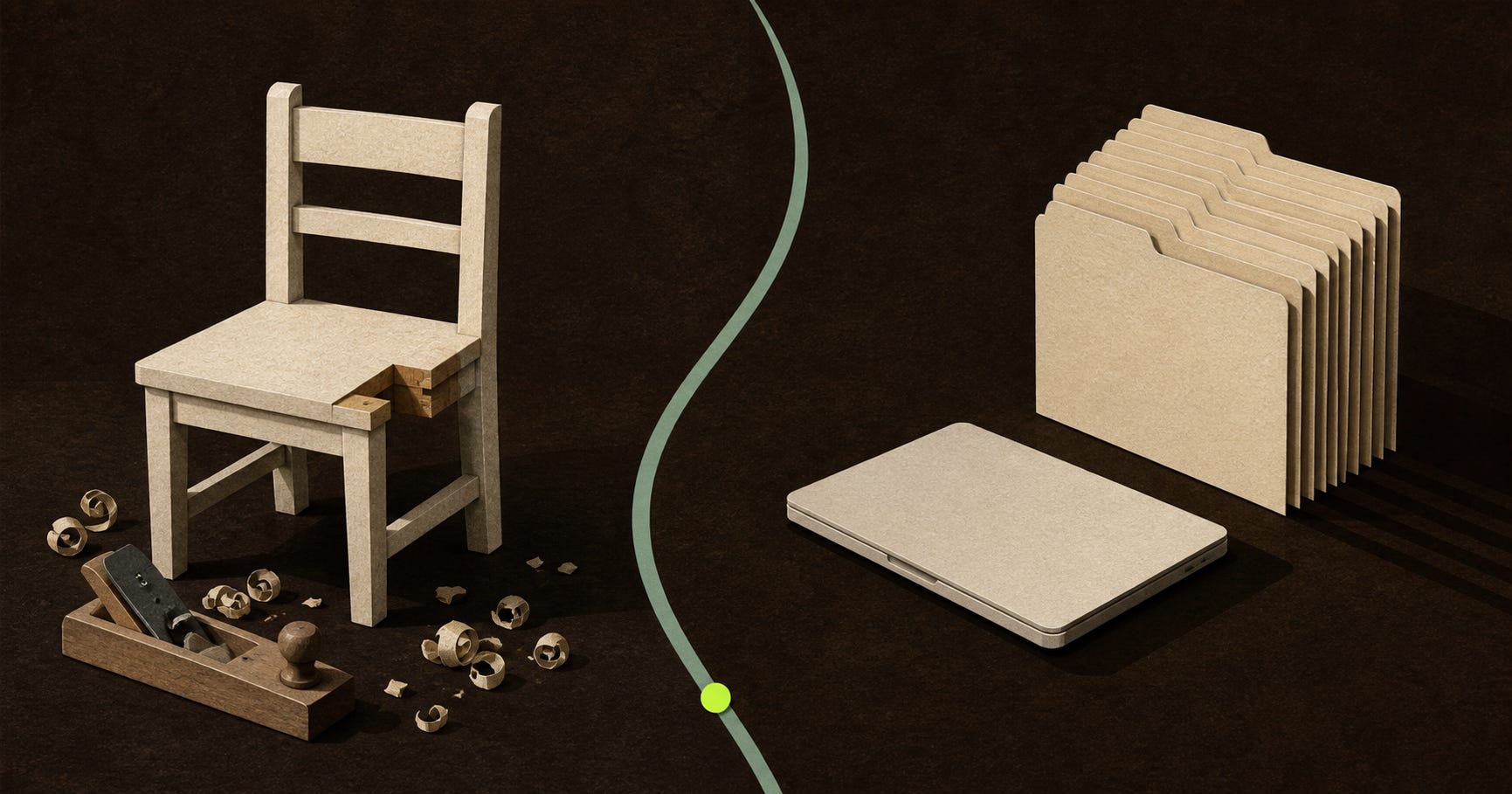
A carpenter sees his finished chair, a gardener sees his finished garden, and a baker sees the sourdough loaf cooling on the counter. Our work was visible on a table.
A half-built bookshelf shows you exactly what remains: two shelves to mount, four screws to tighten, one coat of varnish left. Digital work leaves a different trace, a kind of visual noise with no clear meaning.
With digital work, the reel, the draft or the idea can live in the same place. You have no tell what moved, what’s done, or what the next step is. You feel tired not from the work you did, but from not knowing how much work is left.
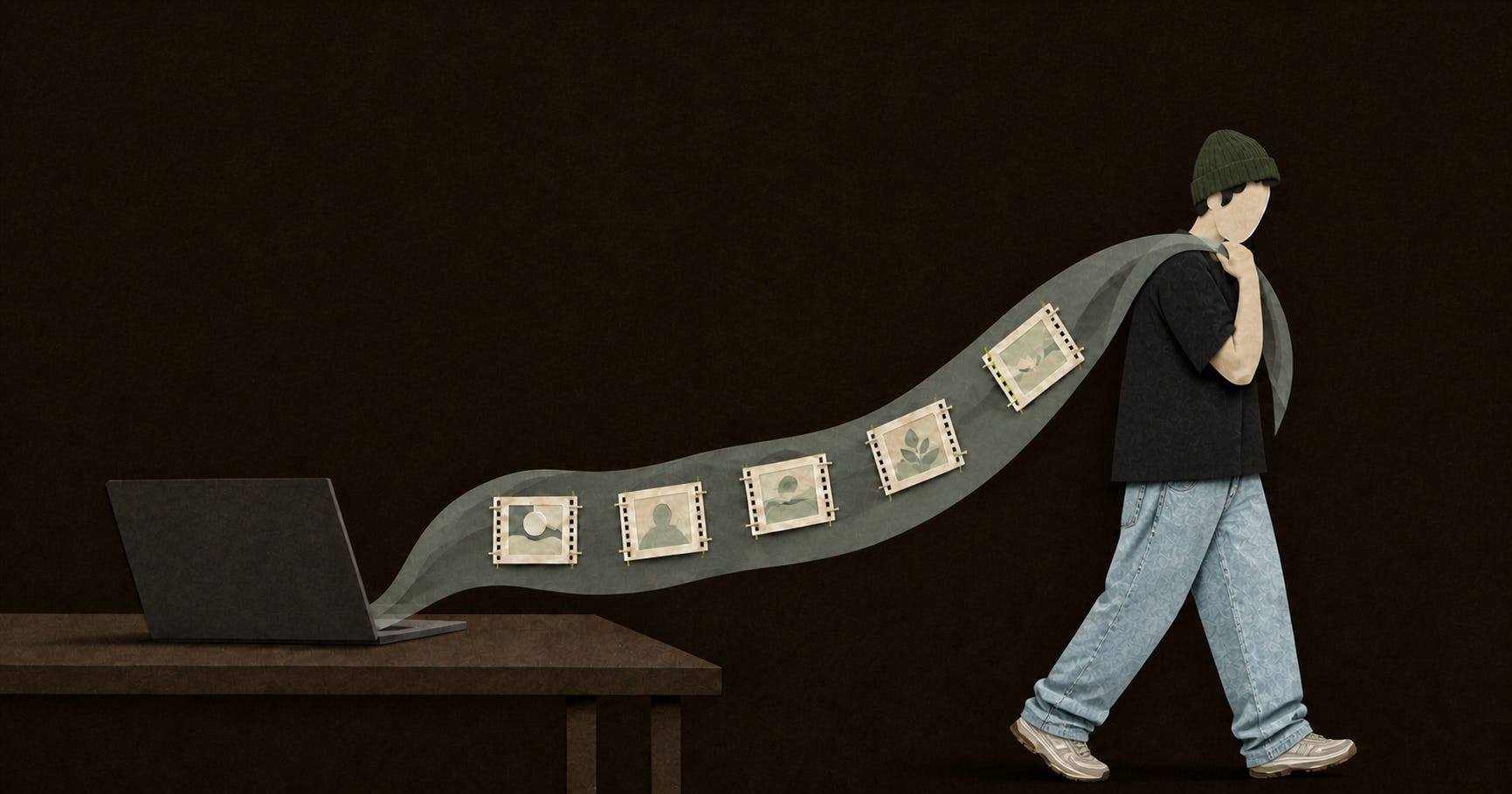
Once you close the lid of the laptop you have no visual of where each work stands or what’s needed for you to finish it.
So you leave the work behind digitally, but you keep carrying it mentally. And the internet gives you more of these invisible projects every day.
Each new day brings a new open loop that never gets closed: a reel you saved to implement a framework, a YouTube video that becomes a side hustle you feel you should start, an app you downloaded to learn a new language.
None of these feels like a commitment. It’s just something useful you might return to. But once you save it, download it, or add it to a list, it starts taking up place in your mind.
With the computer you can have so many videos, reels, and apps to do the thing you want to do.
The problem is that digital work does not always show its state. When you close the laptop, you can’t see which reel needs a caption, which draft is waiting on client feedback, which idea is just a title, or which one went live last Tuesday.
You can keep trying new tools to finish the task in hand. Unless you’re a carpenter or a mechanic choosing the perfect tool is usually a distraction from the most important work.
A new tool can give you another place to store your work, but not a clearer way to see it. What you need is not another app. You need to be able to look at your computer and know: I have done today’s work, this is what can wait, and this is what moved today.
You can’t catch up with infinity. The digital work will always win.
If you feel like this you’ll never catch up, read thisIf you walk by an unfinished puzzle with only one piece left, you have this urge to finish it and put in the last piece. With that last piece you know exactly what’s missing, where it goes and that small action guarantees closure. The gap feels strong because it’s clear and finite.
The internet is the other way around. There is no fixed number of pieces, no clear picture of what “done” looks like, and more things arrive in your way while you are trying to finish the first one.
The goal is not to finish everything; it is to leave a trace that something happened today that moved your goal forward. I call that a daily receipt: one concrete artifact that exists today and didn’t exist yesterday. A published reel. A completed landing page you hit publish on before dinner.
A receipt does not have to be a reel or a page. It is one finished piece of work I can point to and say: this is complete today. It turned from an open tab in my mind into something real outside of it. The rest can wait. They no longer get to decide whether today counted.
Instead of asking yourself, “Am I caught up?” you should ask, “What’s today’s receipt?”
If I can name one thing that moved from intention into reality today, that is my Daily Receipt. It does not clear the rest of the backlog. It just gives me something real to point to when I step away from the computer.
That gives me closure for the day.
Before work, write “Today’s receipt is___, and it counts when___”
For example: “Today’s receipt is the first 15 seconds of Reel 1, and it counts when the cut is locked and exported”
At the end of the day, log the link, file, screenshot or one-line proof in one running note called “Daily Receipts”.
Those five reels are still on my SSD, waiting to be edited and published. The Daily Receipt does not make them disappear. But it gives me a different way to leave today.
Instead of opening Instagram and blaming myself for being behind, I can look at those same five reels and say: Today’s receipt is the first 15 seconds of reel 1. That section is locked.
Tomorrow gets its own receipt.
Reply and tell me: what’s your one daily receipt from today?
— Youssef